
Responsive portfolio architecture
Reusable Astro components support project showcases, experience content, skill summaries, statistics, and calls to action across different viewport sizes.
Professional project
A modern personal portfolio designed to present software engineering experience, client web work, technical projects, and professional background through a polished, performance-focused interface.
Project overview
A closer look at the goals, decisions, and technical thinking that shaped the project.
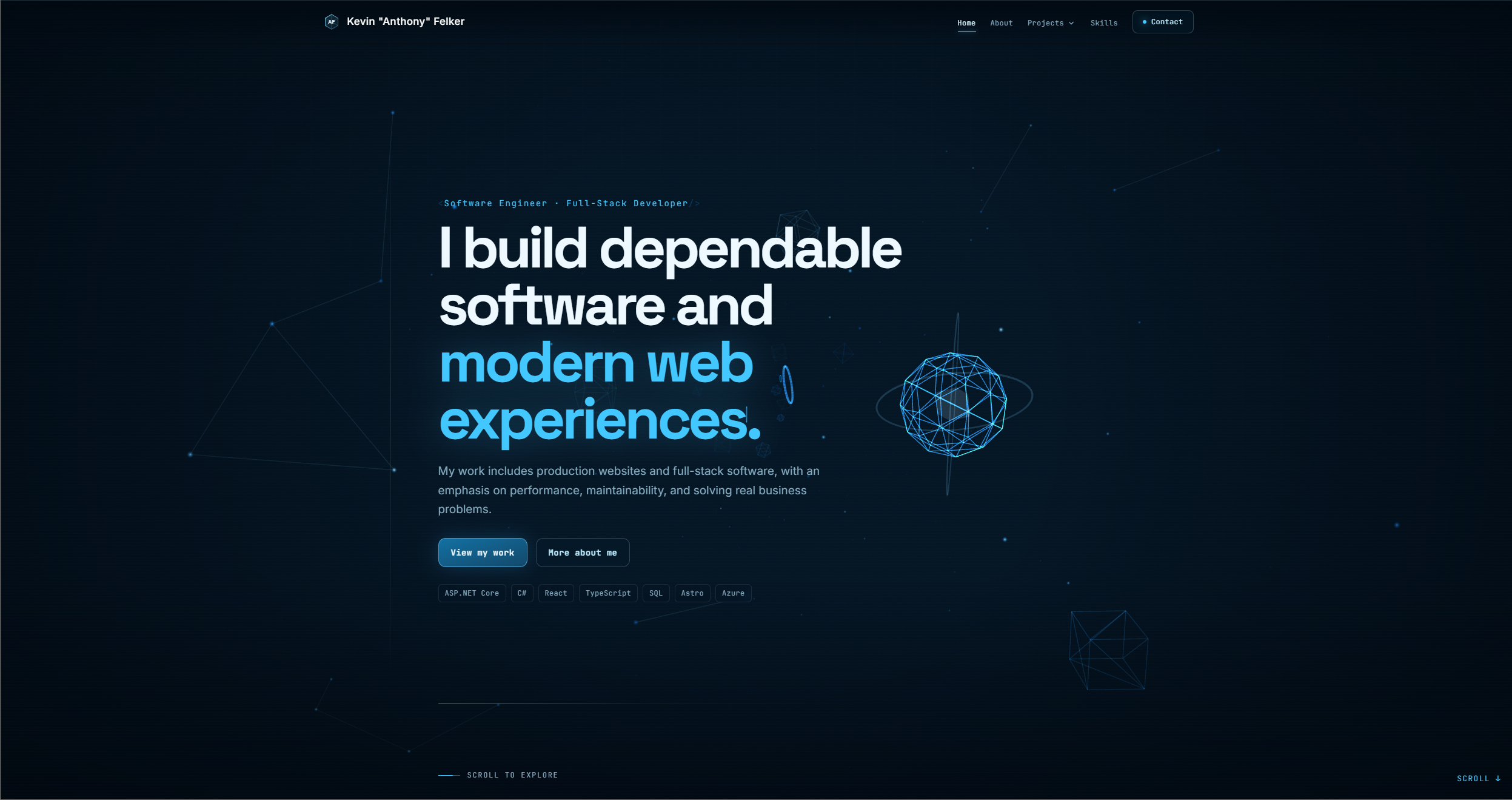
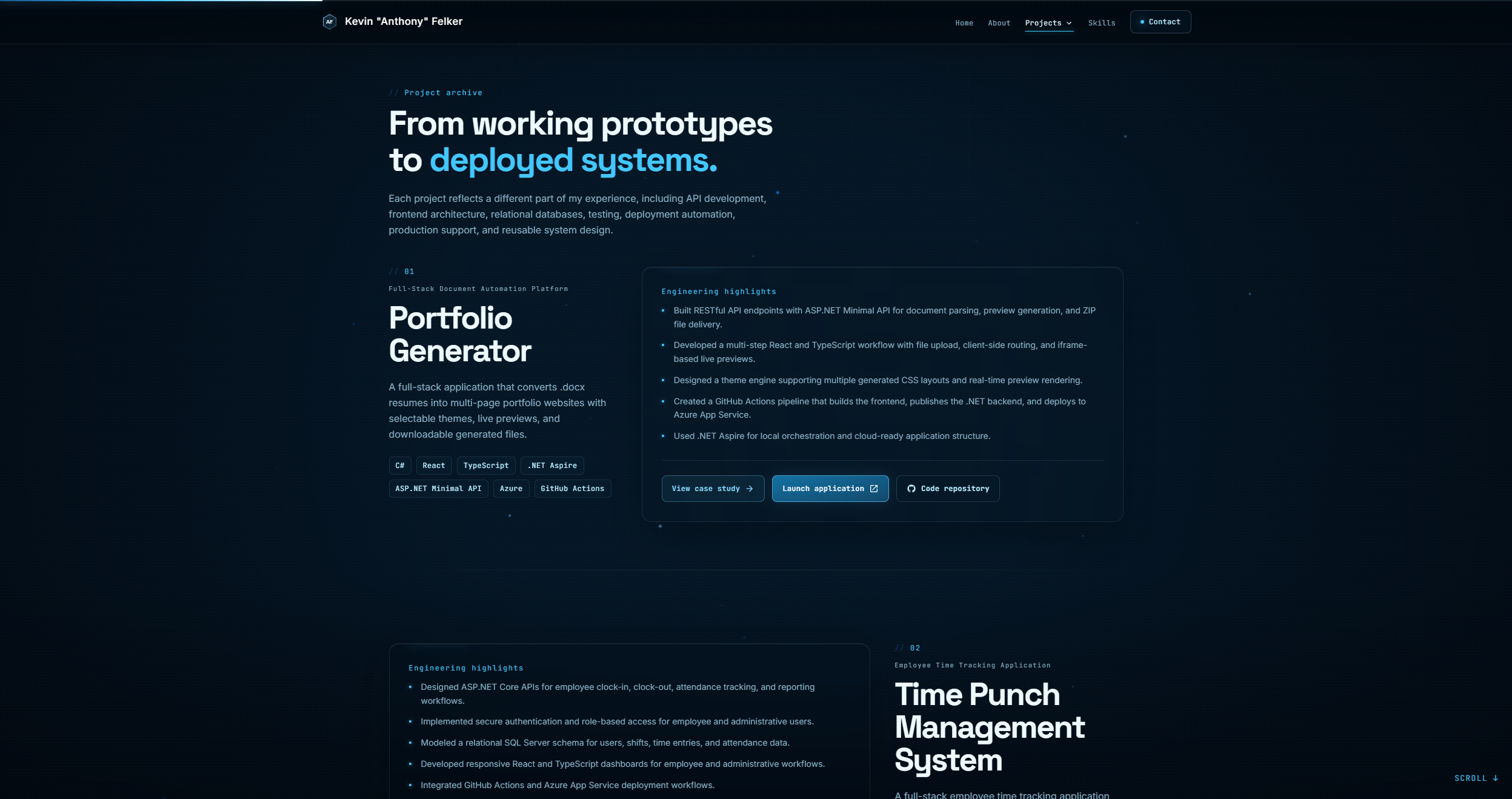
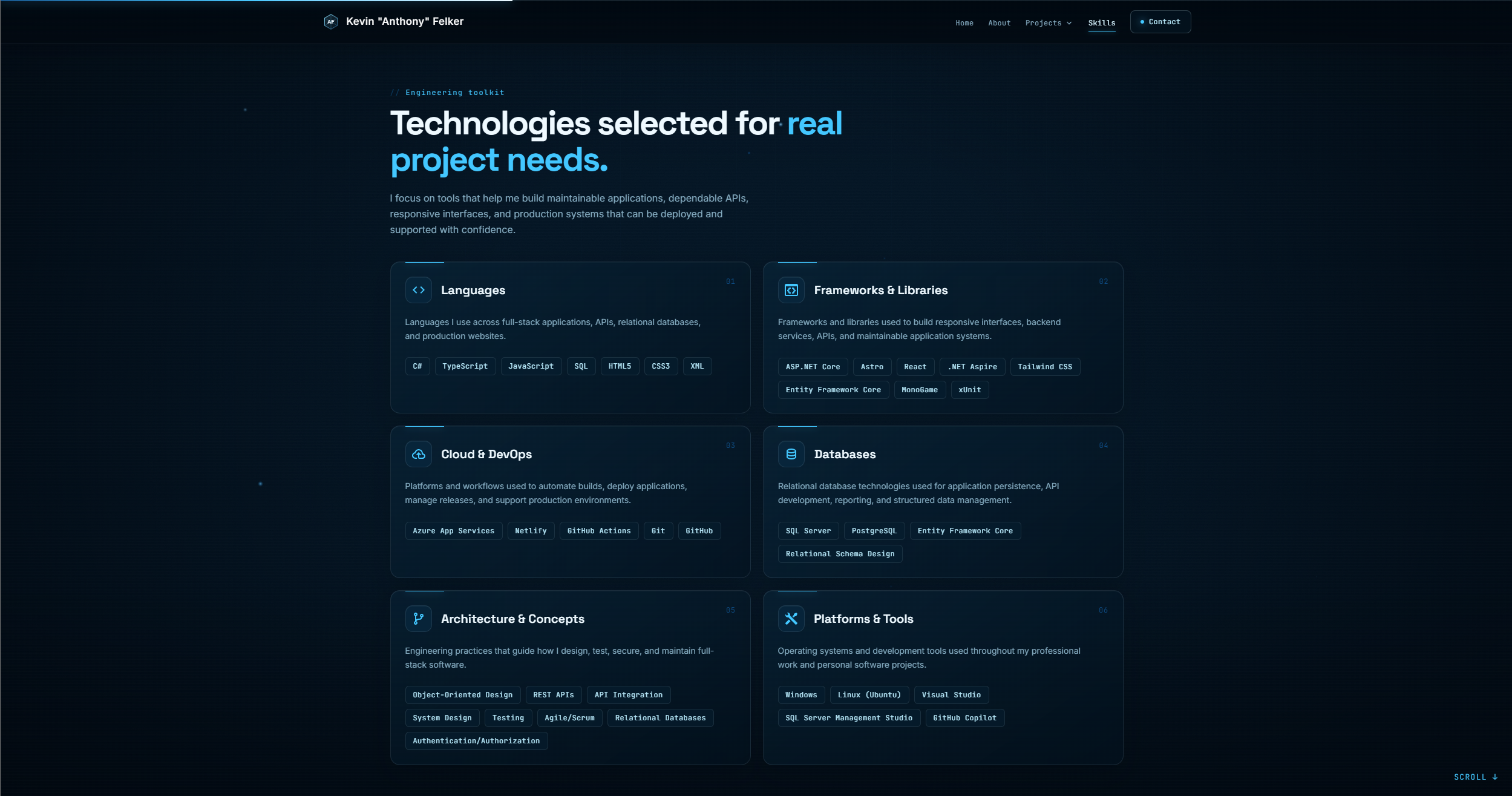
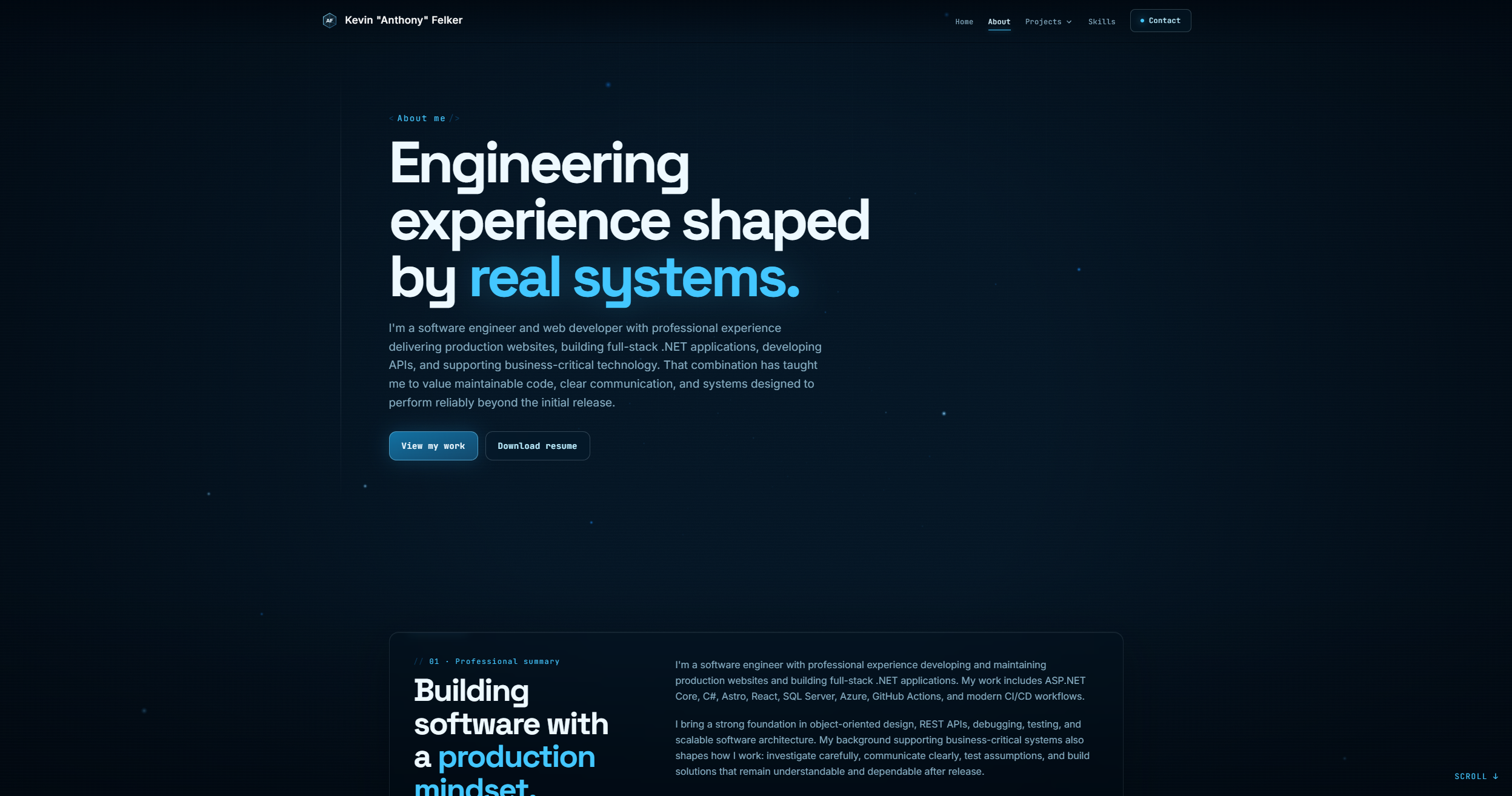
The portfolio was created as a central place to present professional experience, software-engineering projects, client websites, technical skills, and contact information.
The site was designed to feel more like a polished digital product than a traditional résumé page, using strong visual hierarchy, custom motion, responsive components, and a restrained technical aesthetic.
It also serves as an active testing ground for frontend performance, accessibility, responsive image handling, search metadata, and reusable Astro component architecture.
Key features
Core capabilities delivered for AnthonyFelker.com.
Reusable Astro components support project showcases, experience content, skill summaries, statistics, and calls to action across different viewport sizes.
Professional websites and engineering projects are presented through separate content structures while maintaining a consistent visual system.
Typography, icy blue tones, geometric details, and restrained animation create a recognizable personal brand.
Three.js and lightweight frontend interactions add depth without turning the site into a heavily scripted application.
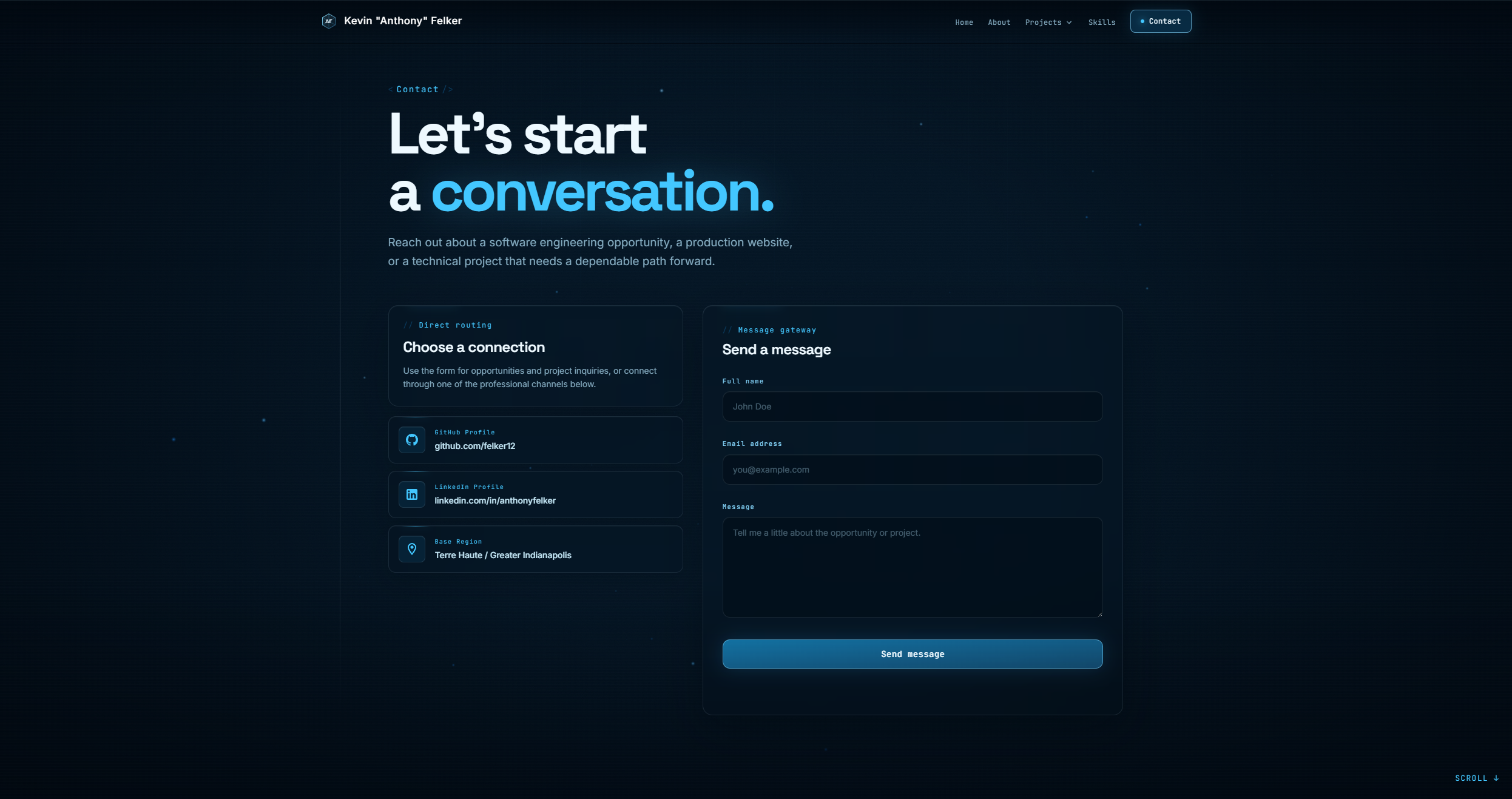
A Web3Forms-powered contact form supports validation, asynchronous submission, bot protection, and accessible feedback.
Canonical URLs, page descriptions, Open Graph data, structured metadata, and sitemap generation support discoverability and sharing.
Visitor journey
The site guides visitors from a concise professional introduction into examples of client work, software projects, technical experience, and direct contact options.
Establish the professional focus and primary areas of expertise.
Present client websites, software projects, and measurable accomplishments.
Provide context around experience, skills, and technical decisions.
Use performance, accessibility, and polished presentation to reinforce credibility.
Provide a clear path for employers, recruiters, and clients to make contact.
Project gallery
Selected screens and interfaces from the project.
Technical highlights
Selected architectural and implementation decisions that shaped the project.
Astro pre-renders public pages for fast delivery, low JavaScript overhead, and straightforward deployment.
Reusable utility patterns maintain consistent spacing, typography, borders, responsive behavior, and component states.
A custom visual effect adds atmosphere while remaining isolated from the rest of the page architecture.
Astro image tooling generates appropriately sized assets for different devices and display densities.
Semantic structure, focus states, skip navigation, readable contrast, and form feedback support keyboard and assistive-technology users.
The site was refined around Lighthouse performance, metadata quality, sitemap support, canonical URLs, and reduced rendering overhead.
Challenges
The constraints and implementation problems that required the most thought.
The design needed enough visual character to feel memorable without distracting from experience, project content, or usability.
Interactive effects had to add depth without introducing unnecessary JavaScript, poor performance, or visual noise.
The portfolio needed to represent both client-facing web development and deeper software-engineering work without making either side feel secondary.
Outcomes
The practical result of the work beyond the interface itself.
Created a central professional presence for software-engineering and web-development work.
Established a reusable Astro foundation for adding projects, experience, and new sections over time.
Produced a high-performing and accessible site that demonstrates the same standards promoted to clients.
Future direction
Potential next steps identified through the current implementation.
Expand individual project case studies
Add richer technical writing or articles
Introduce additional project filtering
Add more interactive demonstrations
Continue refining motion and responsive behavior
Explore what comes next
Website packages provide a practical starting point, while custom scope is available when the project needs more.