
Employee authentication
Secure sign-in workflows support separate access levels for employees and administrators.
Engineering project
A full-stack timekeeping application focused on secure authentication, shift tracking, administrative workflows, and maintainable service architecture.
Project overview
A closer look at the goals, decisions, and technical thinking that shaped the project.
TimePunch explores the architecture behind a practical employee attendance system rather than only the visible clock-in interface.
The application separates employee and administrative responsibilities while keeping authentication, API behavior, persistence, and caching organized for future growth.
Key features
Core capabilities delivered for TimePunch.
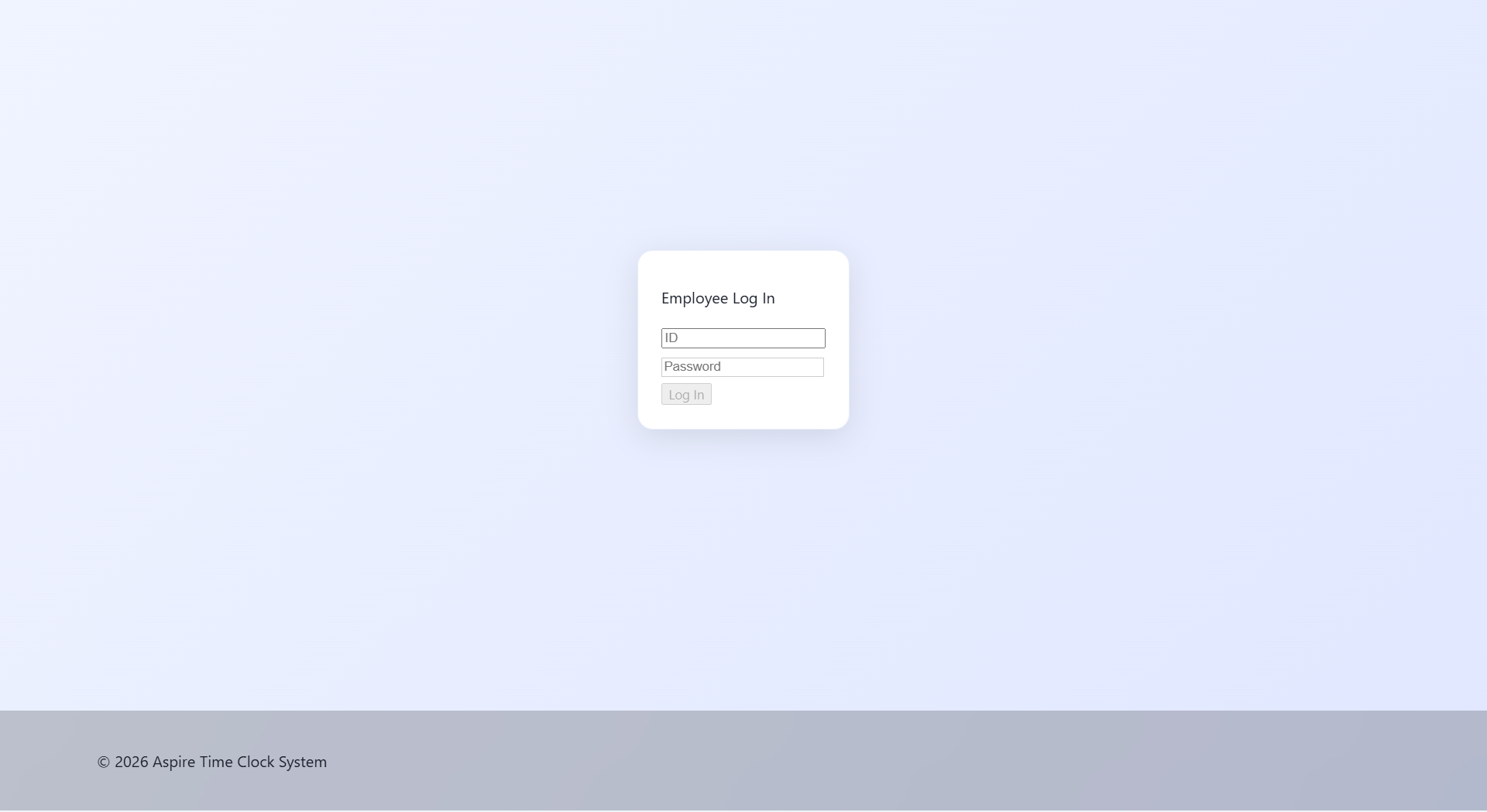
Secure sign-in workflows support separate access levels for employees and administrators.
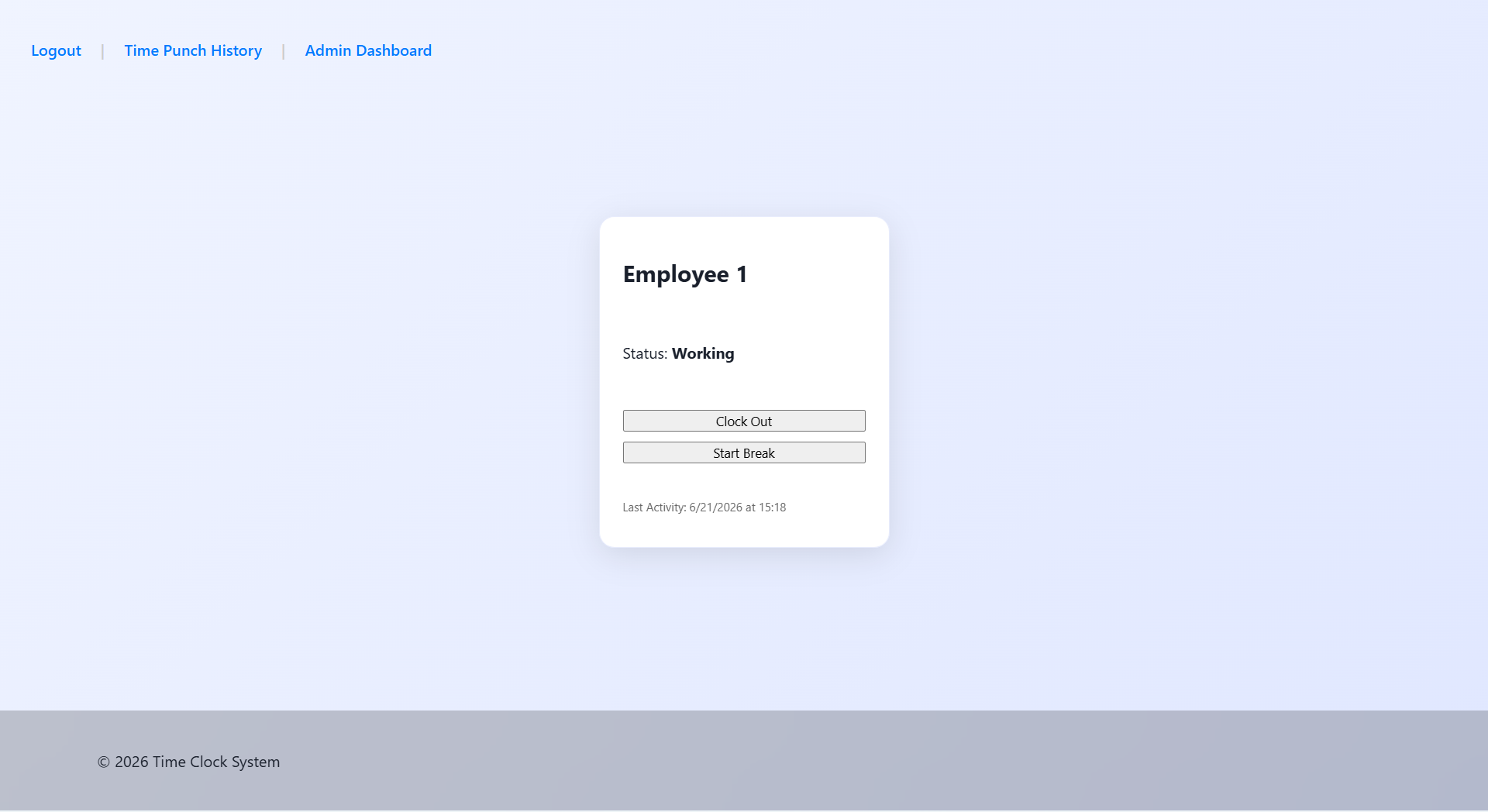
Employees can begin and end shifts while maintaining timestamped attendance history.
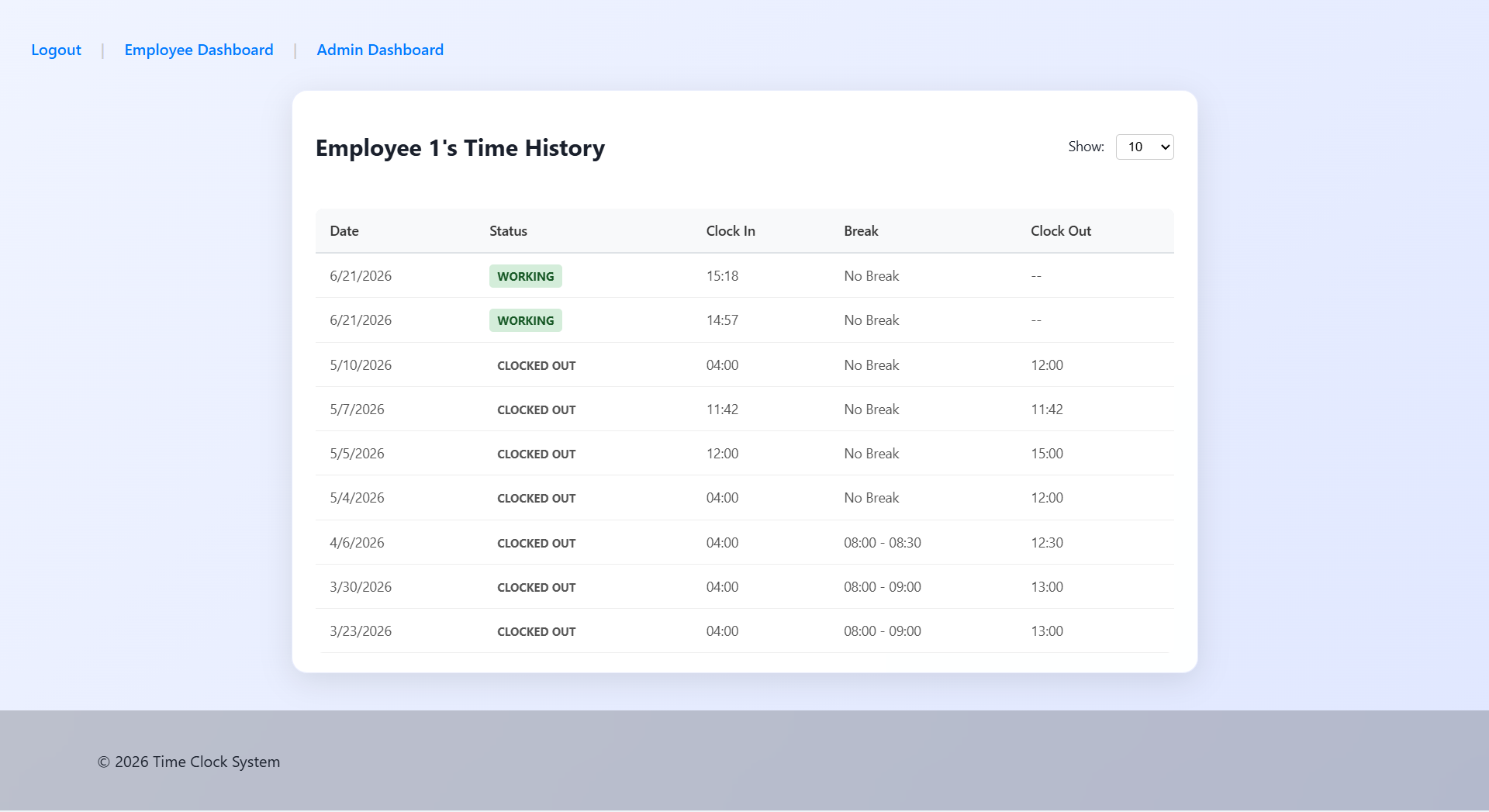
A responsive React interface presents status, worked time, and prior shifts.
Administrative views support attendance review and payroll-oriented inspection.
Authorized users can create, review, update, and remove punch records when corrections are required.
Relational storage organizes users, shifts, and time-entry records.
Application workflow
Employees record work sessions through a focused workflow while administrators review and correct attendance data through separate tools.
Employees and administrators authenticate securely.
An employee records the beginning of a shift.
The application stores and displays the active shift.
The employee records the end of the shift.
Administrators inspect records and manage corrections.
Project gallery
Selected screens and interfaces from the project.
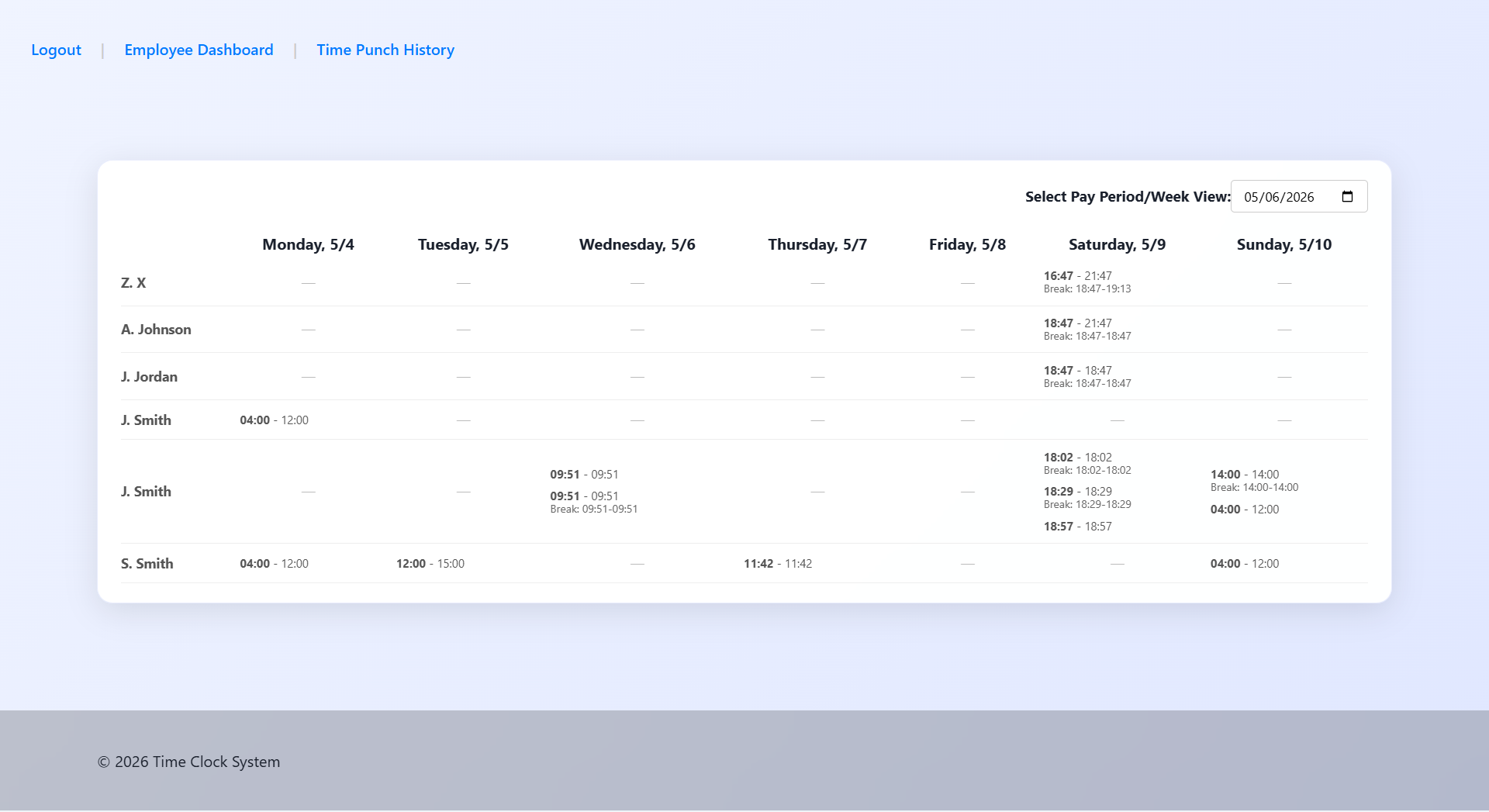
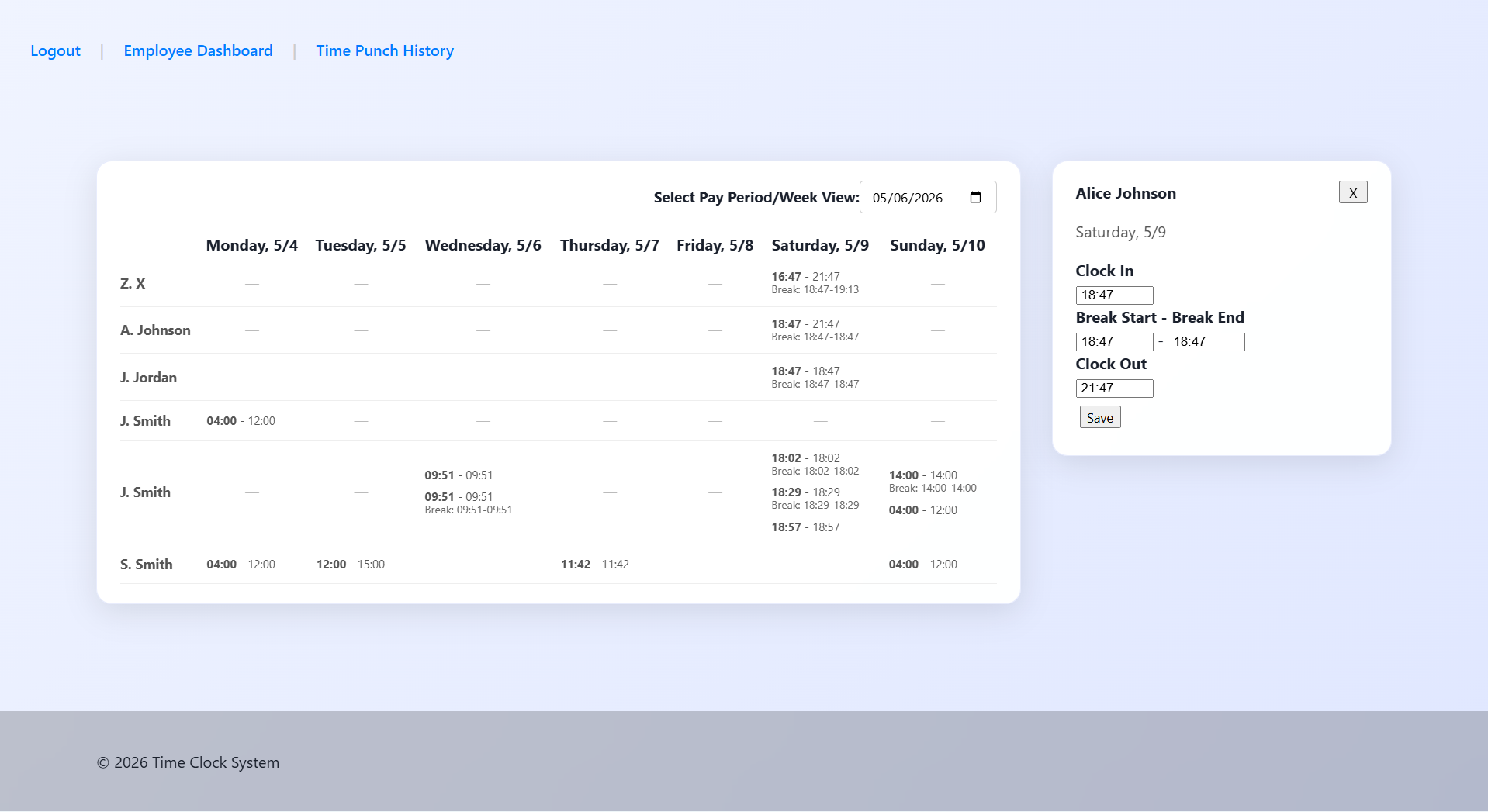
Technical highlights
Selected architectural and implementation decisions that shaped the project.
The backend exposes structured endpoints for authentication, employees, and punch records.
Aspire coordinates application services and development configuration.
The frontend provides distinct employee and administrative experiences.
Authentication work includes password hashing and a foundation for token-based access.
Caching is incorporated where repeated application data can be served efficiently.
Users, shifts, and punch records are modeled with clear relationships.
Challenges
The constraints and implementation problems that required the most thought.
Employee and administrative workflows needed clear authorization boundaries without duplicating application logic.
Time-entry rules had to account for incomplete sessions, corrections, and historical records.
Frontend, API, cache, and database services needed consistent local orchestration and configuration.
Future direction
Potential next steps identified through the current implementation.
Complete token-based authentication
Add password-recovery workflows
Add email notifications
Introduce manager approvals
Add payroll export
Expand deployment automation
Explore what comes next
Custom software projects are scoped around the workflow, users, and technical requirements involved.